✨ New Arrivals Just Dropped!Explore
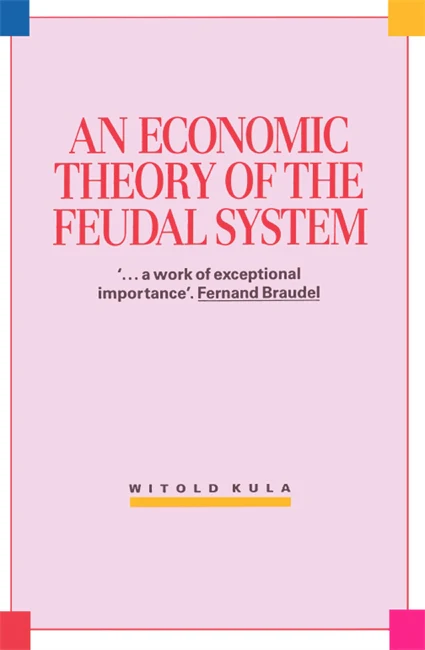
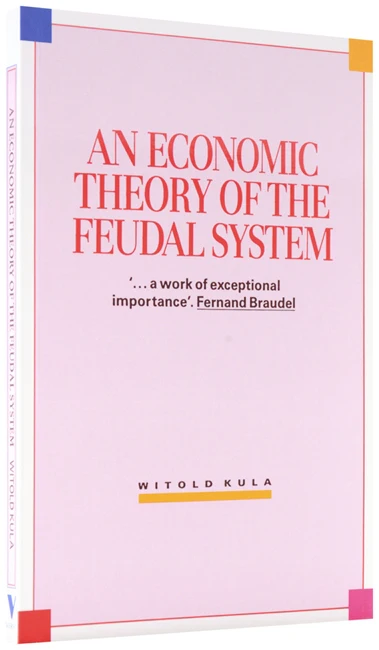
Economic Theory of the Feudal System
Many political studies of feudalism have been written since the famous works of Bloch and Ganshof. Is it possible to construct an economic model of feudalism of comparable logic and coherence? Witold Kula has made one the first serious efforts to propose an economic theory of the particular rationality governing production in a feudal agrarian system. His empirical material is taken from the history of Polish agriculture from the sixteenth century onwards, when Poland was one of the great granaries of Europe, and its peasantry notoriously subjected to the belated serfdom that developed in Eastern Europe in the later middle ages.
Kula lucidly studies the type of economic calculation inherent in a feudal manor, and its mode of adaptation to variations in harvests and markets. Seigneurial demesnes, peasant plots and artisanal guilds are each considered within a common analytical framework. The possible long-term dynamic of a feudal system such as that exemplified by the Polish cereal economy, with its important export sector, is reconstructed. Kula's work ends with a discussion of the problem of periodization in the economic history of feudal agriculture, and of the articulation of conjectural and structural movements within it.
Kula lucidly studies the type of economic calculation inherent in a feudal manor, and its mode of adaptation to variations in harvests and markets. Seigneurial demesnes, peasant plots and artisanal guilds are each considered within a common analytical framework. The possible long-term dynamic of a feudal system such as that exemplified by the Polish cereal economy, with its important export sector, is reconstructed. Kula's work ends with a discussion of the problem of periodization in the economic history of feudal agriculture, and of the articulation of conjectural and structural movements within it.
$5.70
Original: $18.99
-70%Economic Theory of the Feudal System—
$18.99
$5.70Product Information
Product Information
Shipping & Returns
Shipping & Returns
Description
Many political studies of feudalism have been written since the famous works of Bloch and Ganshof. Is it possible to construct an economic model of feudalism of comparable logic and coherence? Witold Kula has made one the first serious efforts to propose an economic theory of the particular rationality governing production in a feudal agrarian system. His empirical material is taken from the history of Polish agriculture from the sixteenth century onwards, when Poland was one of the great granaries of Europe, and its peasantry notoriously subjected to the belated serfdom that developed in Eastern Europe in the later middle ages.
Kula lucidly studies the type of economic calculation inherent in a feudal manor, and its mode of adaptation to variations in harvests and markets. Seigneurial demesnes, peasant plots and artisanal guilds are each considered within a common analytical framework. The possible long-term dynamic of a feudal system such as that exemplified by the Polish cereal economy, with its important export sector, is reconstructed. Kula's work ends with a discussion of the problem of periodization in the economic history of feudal agriculture, and of the articulation of conjectural and structural movements within it.
Kula lucidly studies the type of economic calculation inherent in a feudal manor, and its mode of adaptation to variations in harvests and markets. Seigneurial demesnes, peasant plots and artisanal guilds are each considered within a common analytical framework. The possible long-term dynamic of a feudal system such as that exemplified by the Polish cereal economy, with its important export sector, is reconstructed. Kula's work ends with a discussion of the problem of periodization in the economic history of feudal agriculture, and of the articulation of conjectural and structural movements within it.