✨ New Arrivals Just Dropped!Explore
Consuming Fiction
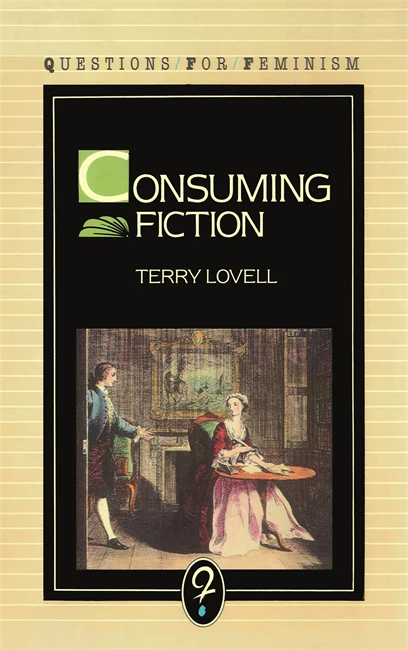
Consuming Fiction traces the path of the English novel from commodity to literature, arguing that as its literary status rose, its form changed, and so did the part played by women in its production and consumption.
In the late eighteenth century the literary credentials of the novel were low, its alleged moral effects deplored. These failings were attributed to its commercial basis, which was blamed for the stimulation of 'debased' forms of fantasy and escape; they were also attributed to the feminization of a fiction industry dominated numerically by women.
The period which produced the nineteenth-century Great Tradition saw the novel restored to its 'rightful' place as literature, and the return of literary fiction to an aesthetic of realism. Although a few women found a place within the Great Tradition, they had lost their earlier position of dominance.
However, literary pursuits of all kinds have retained an ambiguous gender-identity. English, institutionalized at last within the curriculum, prospered as a fit object of study for young women as they gained entry to higher education. Consuming Fiction ends with an analysis of the strategic but subordinate role played by women in the transmission of a bourgeois literary culture.
'The pen is almost as pretty an implement in a woman's fingers, as a needle.' SAMUEL RICHARDSON to Sarah Chapone, 1751.*
In the late eighteenth century the literary credentials of the novel were low, its alleged moral effects deplored. These failings were attributed to its commercial basis, which was blamed for the stimulation of 'debased' forms of fantasy and escape; they were also attributed to the feminization of a fiction industry dominated numerically by women.
The period which produced the nineteenth-century Great Tradition saw the novel restored to its 'rightful' place as literature, and the return of literary fiction to an aesthetic of realism. Although a few women found a place within the Great Tradition, they had lost their earlier position of dominance.
However, literary pursuits of all kinds have retained an ambiguous gender-identity. English, institutionalized at last within the curriculum, prospered as a fit object of study for young women as they gained entry to higher education. Consuming Fiction ends with an analysis of the strategic but subordinate role played by women in the transmission of a bourgeois literary culture.
'The pen is almost as pretty an implement in a woman's fingers, as a needle.' SAMUEL RICHARDSON to Sarah Chapone, 1751.*
$19.00
Consuming Fiction—
$19.00
Product Information
Product Information
Shipping & Returns
Shipping & Returns
Description
Consuming Fiction traces the path of the English novel from commodity to literature, arguing that as its literary status rose, its form changed, and so did the part played by women in its production and consumption.
In the late eighteenth century the literary credentials of the novel were low, its alleged moral effects deplored. These failings were attributed to its commercial basis, which was blamed for the stimulation of 'debased' forms of fantasy and escape; they were also attributed to the feminization of a fiction industry dominated numerically by women.
The period which produced the nineteenth-century Great Tradition saw the novel restored to its 'rightful' place as literature, and the return of literary fiction to an aesthetic of realism. Although a few women found a place within the Great Tradition, they had lost their earlier position of dominance.
However, literary pursuits of all kinds have retained an ambiguous gender-identity. English, institutionalized at last within the curriculum, prospered as a fit object of study for young women as they gained entry to higher education. Consuming Fiction ends with an analysis of the strategic but subordinate role played by women in the transmission of a bourgeois literary culture.
'The pen is almost as pretty an implement in a woman's fingers, as a needle.' SAMUEL RICHARDSON to Sarah Chapone, 1751.*
In the late eighteenth century the literary credentials of the novel were low, its alleged moral effects deplored. These failings were attributed to its commercial basis, which was blamed for the stimulation of 'debased' forms of fantasy and escape; they were also attributed to the feminization of a fiction industry dominated numerically by women.
The period which produced the nineteenth-century Great Tradition saw the novel restored to its 'rightful' place as literature, and the return of literary fiction to an aesthetic of realism. Although a few women found a place within the Great Tradition, they had lost their earlier position of dominance.
However, literary pursuits of all kinds have retained an ambiguous gender-identity. English, institutionalized at last within the curriculum, prospered as a fit object of study for young women as they gained entry to higher education. Consuming Fiction ends with an analysis of the strategic but subordinate role played by women in the transmission of a bourgeois literary culture.
'The pen is almost as pretty an implement in a woman's fingers, as a needle.' SAMUEL RICHARDSON to Sarah Chapone, 1751.*