✨ New Arrivals Just Dropped!Explore
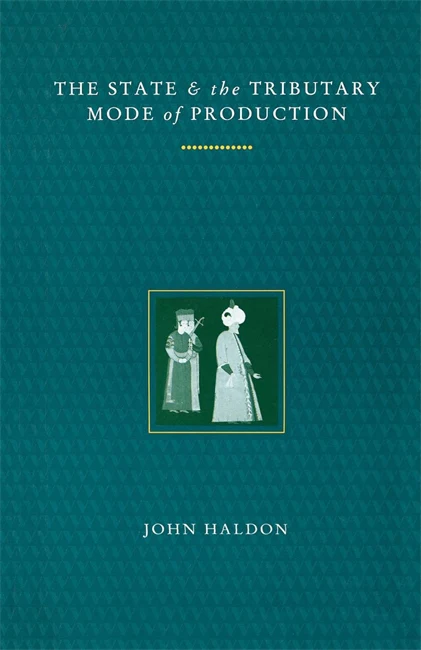
The State and the Tributary Mode of Production
In this groundbreaking critique of both traditional and Marxist notions of feudalism and of the pre-capitalist state, John Haldon considers the configuration of state and social relations in medieval Europe and Mughal India as well as in Byzantium and the Ottoman Empire. He argues that a Marxist reading of the pre-capitalist state can take account of the autonomy of power relations and avoid economic reductionism while still focusing on the forms of tribute which sustained the ruling power. Haldon explores the conflicts to which these gave rise and shows the Ottoman state elite, often held to be a clear example of independence from underlying social relations, to be deeply enmeshed in economic relationships and the extraction of tribute.
Haldon argues that feudalism was the specifically European form of a much more widely diffused tributary mode, whose characteristic social relations and structural constraints can be seen at work in the Byzantine, Ottoman and Mughal empires as well. While acknowledging the range of ideological and cultural variation within and between these examples of the tributary mode, Haldon denies the thesis that such “superstructural” variations themselves yielded fundamentally contrasting social relations.
Haldon argues that feudalism was the specifically European form of a much more widely diffused tributary mode, whose characteristic social relations and structural constraints can be seen at work in the Byzantine, Ottoman and Mughal empires as well. While acknowledging the range of ideological and cultural variation within and between these examples of the tributary mode, Haldon denies the thesis that such “superstructural” variations themselves yielded fundamentally contrasting social relations.
$8.98
Original: $29.95
-70%The State and the Tributary Mode of Production—
$29.95
$8.98Product Information
Product Information
Shipping & Returns
Shipping & Returns
Description
In this groundbreaking critique of both traditional and Marxist notions of feudalism and of the pre-capitalist state, John Haldon considers the configuration of state and social relations in medieval Europe and Mughal India as well as in Byzantium and the Ottoman Empire. He argues that a Marxist reading of the pre-capitalist state can take account of the autonomy of power relations and avoid economic reductionism while still focusing on the forms of tribute which sustained the ruling power. Haldon explores the conflicts to which these gave rise and shows the Ottoman state elite, often held to be a clear example of independence from underlying social relations, to be deeply enmeshed in economic relationships and the extraction of tribute.
Haldon argues that feudalism was the specifically European form of a much more widely diffused tributary mode, whose characteristic social relations and structural constraints can be seen at work in the Byzantine, Ottoman and Mughal empires as well. While acknowledging the range of ideological and cultural variation within and between these examples of the tributary mode, Haldon denies the thesis that such “superstructural” variations themselves yielded fundamentally contrasting social relations.
Haldon argues that feudalism was the specifically European form of a much more widely diffused tributary mode, whose characteristic social relations and structural constraints can be seen at work in the Byzantine, Ottoman and Mughal empires as well. While acknowledging the range of ideological and cultural variation within and between these examples of the tributary mode, Haldon denies the thesis that such “superstructural” variations themselves yielded fundamentally contrasting social relations.