✨ New Arrivals Just Dropped!Explore
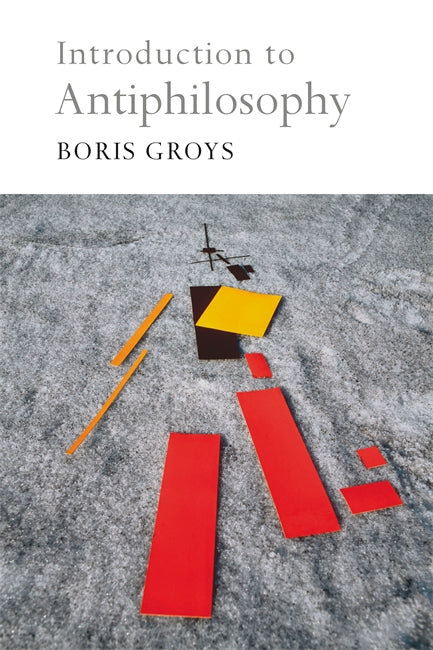
Introduction to Antiphilosophy
Philosophy is traditionally understood as the search for universal truths, and philosophers are supposed to transmit those truths beyond the limits of their own culture. But, today, we have become sceptical about the ability of an individual philosopher to engage in ‘universal thinking’, so philosophy seems to capitulate in the face of cultural relativism.
In Introduction to Antiphilosophy, Boris Groys argues that modern ‘antiphilosophy’ does not pursue the universality of thought as its goal but proposes in its place the universality of life, material forces, social practices, passions, and experiences – angst, vitality, ecstasy, the gift, revolution, laughter or ‘profane illumination’ – and he analyses this shift from thought to life and action in the work of thinkers from Kierkegaard to Derrida, from Nietzsche to Benjamin.
Ranging across the history of modern thought, Introduction to Antiphilosophy endeavours to liberate philosophy from the stereotypes that hinder its development.
In Introduction to Antiphilosophy, Boris Groys argues that modern ‘antiphilosophy’ does not pursue the universality of thought as its goal but proposes in its place the universality of life, material forces, social practices, passions, and experiences – angst, vitality, ecstasy, the gift, revolution, laughter or ‘profane illumination’ – and he analyses this shift from thought to life and action in the work of thinkers from Kierkegaard to Derrida, from Nietzsche to Benjamin.
Ranging across the history of modern thought, Introduction to Antiphilosophy endeavours to liberate philosophy from the stereotypes that hinder its development.
Select Title
From $3.00
Original: $9.99
-70%Introduction to Antiphilosophy—
$9.99
$3.00Product Information
Product Information
Shipping & Returns
Shipping & Returns
Description
Philosophy is traditionally understood as the search for universal truths, and philosophers are supposed to transmit those truths beyond the limits of their own culture. But, today, we have become sceptical about the ability of an individual philosopher to engage in ‘universal thinking’, so philosophy seems to capitulate in the face of cultural relativism.
In Introduction to Antiphilosophy, Boris Groys argues that modern ‘antiphilosophy’ does not pursue the universality of thought as its goal but proposes in its place the universality of life, material forces, social practices, passions, and experiences – angst, vitality, ecstasy, the gift, revolution, laughter or ‘profane illumination’ – and he analyses this shift from thought to life and action in the work of thinkers from Kierkegaard to Derrida, from Nietzsche to Benjamin.
Ranging across the history of modern thought, Introduction to Antiphilosophy endeavours to liberate philosophy from the stereotypes that hinder its development.
In Introduction to Antiphilosophy, Boris Groys argues that modern ‘antiphilosophy’ does not pursue the universality of thought as its goal but proposes in its place the universality of life, material forces, social practices, passions, and experiences – angst, vitality, ecstasy, the gift, revolution, laughter or ‘profane illumination’ – and he analyses this shift from thought to life and action in the work of thinkers from Kierkegaard to Derrida, from Nietzsche to Benjamin.
Ranging across the history of modern thought, Introduction to Antiphilosophy endeavours to liberate philosophy from the stereotypes that hinder its development.