✨ New Arrivals Just Dropped!Explore
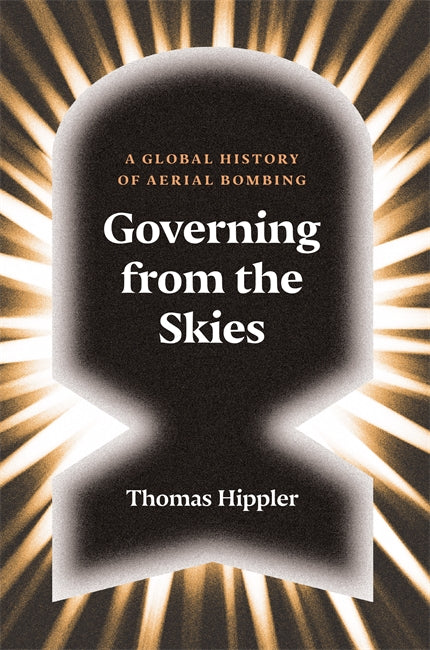
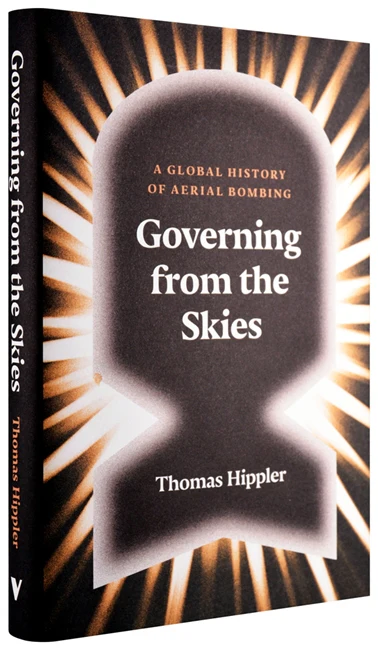
Governing from the Skies
Ever since its invention, aviation has embodied the dream of perpetual peace between nations, yet the other side of this is the nightmare of an unprecedented deadly power. A power initially deployed on populations that the colonizers deemed too restive, it was then used to strike the cities of Europe and Japan during World War II.
With air war it is now the people who are directly taken as target, the people as support for the war effort, and the sovereign people identified with the state. This amounts to a democratisation of war, and so blurs the distinction between war and peace.
This is the political shift that has led us today to a world governance under United States hegemony defined as ‘perpetual low-intensity war’, which is presently striking regions such as Yemen and Pakistan, but which tomorrow could spread to the whole world population.
Air war thus brings together the major themes of the past century: the nationalization of societies and war, democracy and totalitarianism, colonialism and decolonization, Third World-ism and globalization, and the welfare state and its decline in the face of neoliberalism. The history of aerial bombing offers a privileged perspective for writing a global history of the twentieth century.
With air war it is now the people who are directly taken as target, the people as support for the war effort, and the sovereign people identified with the state. This amounts to a democratisation of war, and so blurs the distinction between war and peace.
This is the political shift that has led us today to a world governance under United States hegemony defined as ‘perpetual low-intensity war’, which is presently striking regions such as Yemen and Pakistan, but which tomorrow could spread to the whole world population.
Air war thus brings together the major themes of the past century: the nationalization of societies and war, democracy and totalitarianism, colonialism and decolonization, Third World-ism and globalization, and the welfare state and its decline in the face of neoliberalism. The history of aerial bombing offers a privileged perspective for writing a global history of the twentieth century.
Select Title
From $7.48
Original: $24.95
-70%Governing from the Skies—
$24.95
$7.48Product Information
Product Information
Shipping & Returns
Shipping & Returns
Description
Ever since its invention, aviation has embodied the dream of perpetual peace between nations, yet the other side of this is the nightmare of an unprecedented deadly power. A power initially deployed on populations that the colonizers deemed too restive, it was then used to strike the cities of Europe and Japan during World War II.
With air war it is now the people who are directly taken as target, the people as support for the war effort, and the sovereign people identified with the state. This amounts to a democratisation of war, and so blurs the distinction between war and peace.
This is the political shift that has led us today to a world governance under United States hegemony defined as ‘perpetual low-intensity war’, which is presently striking regions such as Yemen and Pakistan, but which tomorrow could spread to the whole world population.
Air war thus brings together the major themes of the past century: the nationalization of societies and war, democracy and totalitarianism, colonialism and decolonization, Third World-ism and globalization, and the welfare state and its decline in the face of neoliberalism. The history of aerial bombing offers a privileged perspective for writing a global history of the twentieth century.
With air war it is now the people who are directly taken as target, the people as support for the war effort, and the sovereign people identified with the state. This amounts to a democratisation of war, and so blurs the distinction between war and peace.
This is the political shift that has led us today to a world governance under United States hegemony defined as ‘perpetual low-intensity war’, which is presently striking regions such as Yemen and Pakistan, but which tomorrow could spread to the whole world population.
Air war thus brings together the major themes of the past century: the nationalization of societies and war, democracy and totalitarianism, colonialism and decolonization, Third World-ism and globalization, and the welfare state and its decline in the face of neoliberalism. The history of aerial bombing offers a privileged perspective for writing a global history of the twentieth century.