✨ New Arrivals Just Dropped!Explore
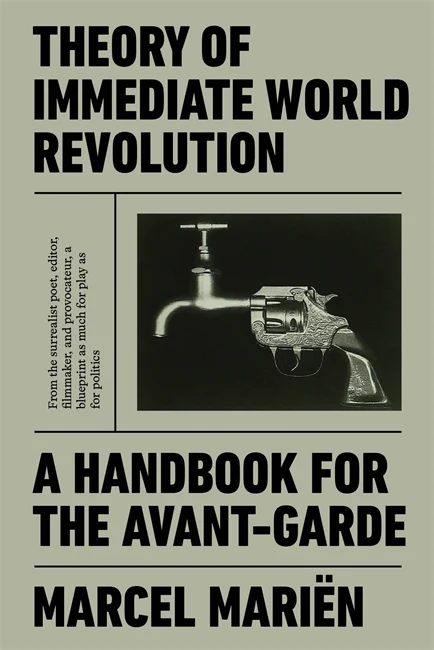
Theory of Immediate World Revolution
In 1958, Belgian surrealist Marcel Mariën drafted a plan to topple capitalism on a global scale—achievable in a single year, in any place, at any time. The catch? It required three hundred accomplices, and it was destined to fail.
Mariën’s text dares to imagine the unimaginable, offering a blueprint as much for play as for politics. By fusing the spirit of surrealism with the urgency of the atomic age, Mariën exposes the thin line between theory and performance, reality and fiction. This book captures one of his boldest gestures: a proposal not to succeed, but to alter the very way we think about revolution.
Mariën’s text dares to imagine the unimaginable, offering a blueprint as much for play as for politics. By fusing the spirit of surrealism with the urgency of the atomic age, Mariën exposes the thin line between theory and performance, reality and fiction. This book captures one of his boldest gestures: a proposal not to succeed, but to alter the very way we think about revolution.
Select Title
From $9.99
Theory of Immediate World Revolution—
$9.99
Product Information
Product Information
Shipping & Returns
Shipping & Returns
Description
In 1958, Belgian surrealist Marcel Mariën drafted a plan to topple capitalism on a global scale—achievable in a single year, in any place, at any time. The catch? It required three hundred accomplices, and it was destined to fail.
Mariën’s text dares to imagine the unimaginable, offering a blueprint as much for play as for politics. By fusing the spirit of surrealism with the urgency of the atomic age, Mariën exposes the thin line between theory and performance, reality and fiction. This book captures one of his boldest gestures: a proposal not to succeed, but to alter the very way we think about revolution.
Mariën’s text dares to imagine the unimaginable, offering a blueprint as much for play as for politics. By fusing the spirit of surrealism with the urgency of the atomic age, Mariën exposes the thin line between theory and performance, reality and fiction. This book captures one of his boldest gestures: a proposal not to succeed, but to alter the very way we think about revolution.